| Major Groups > Gilled Mushrooms > Pale-Spored > Lepiotoid Mushrooms > Leucoagaricus americanus |

|
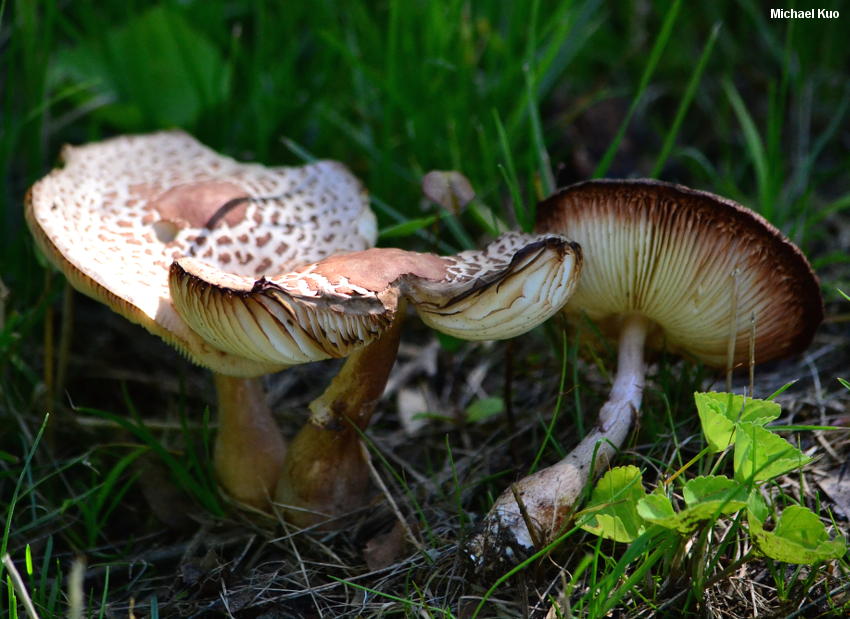
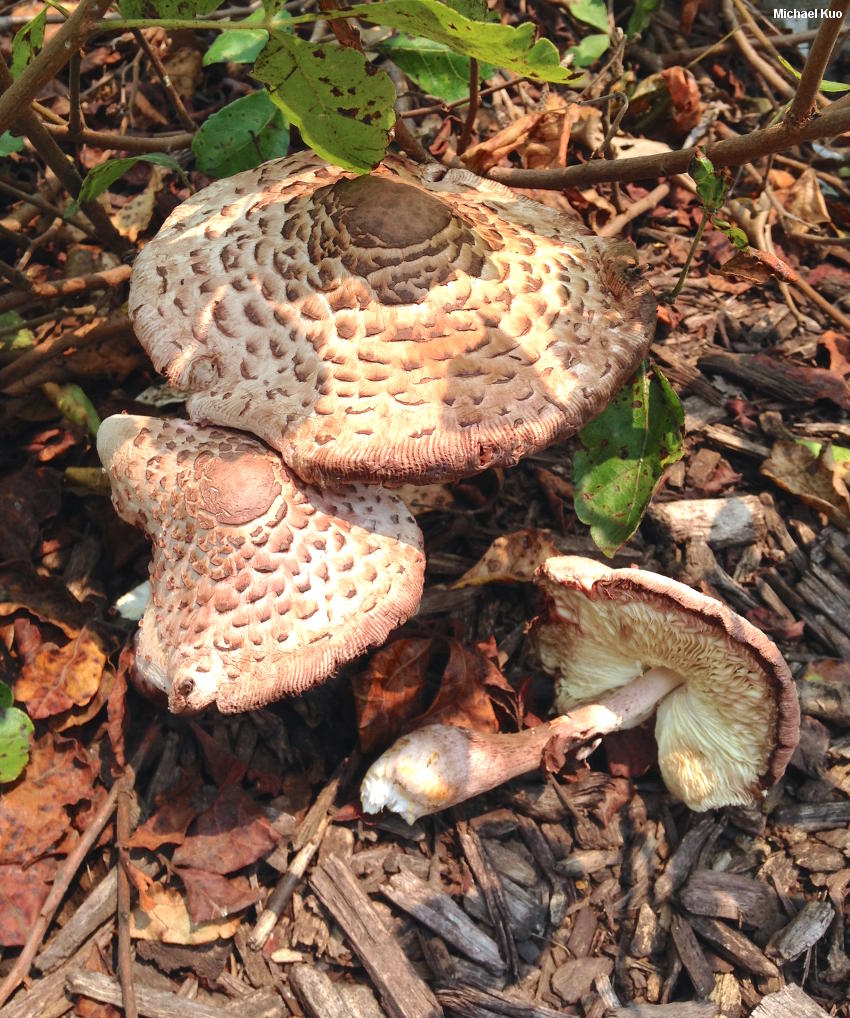
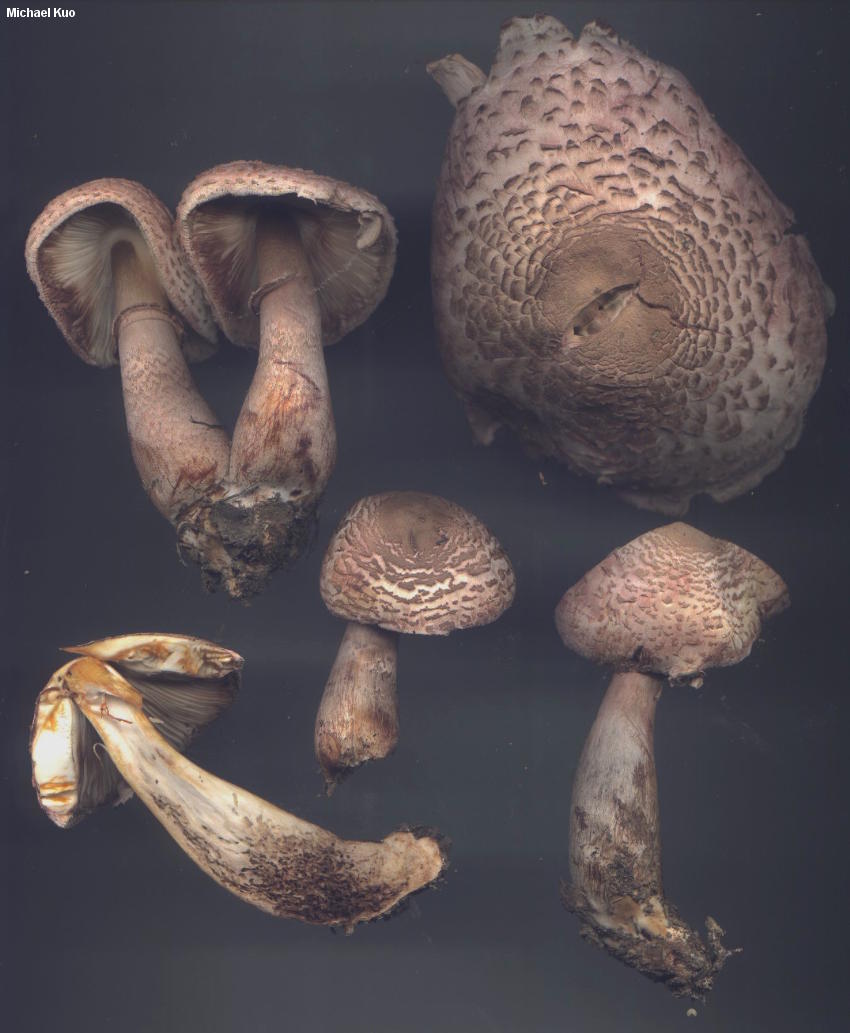
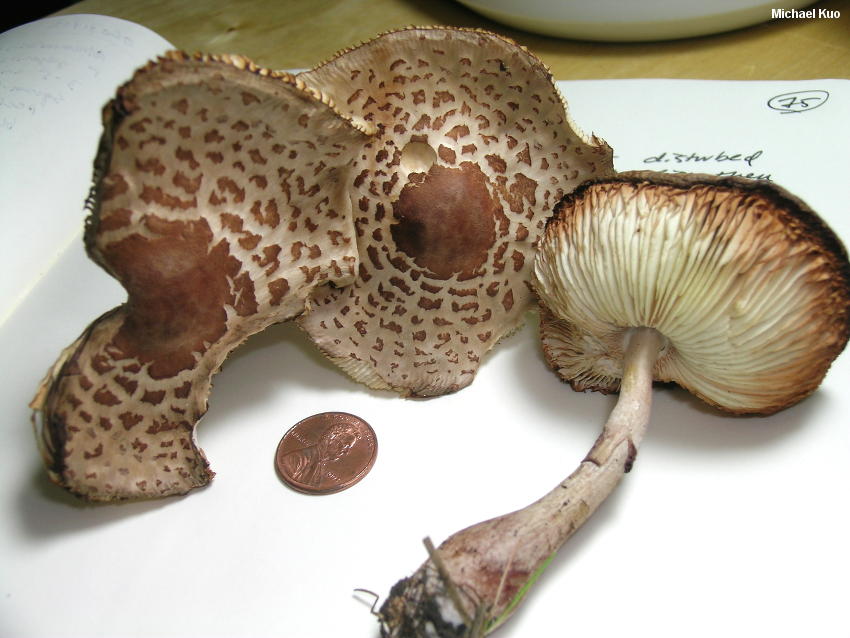
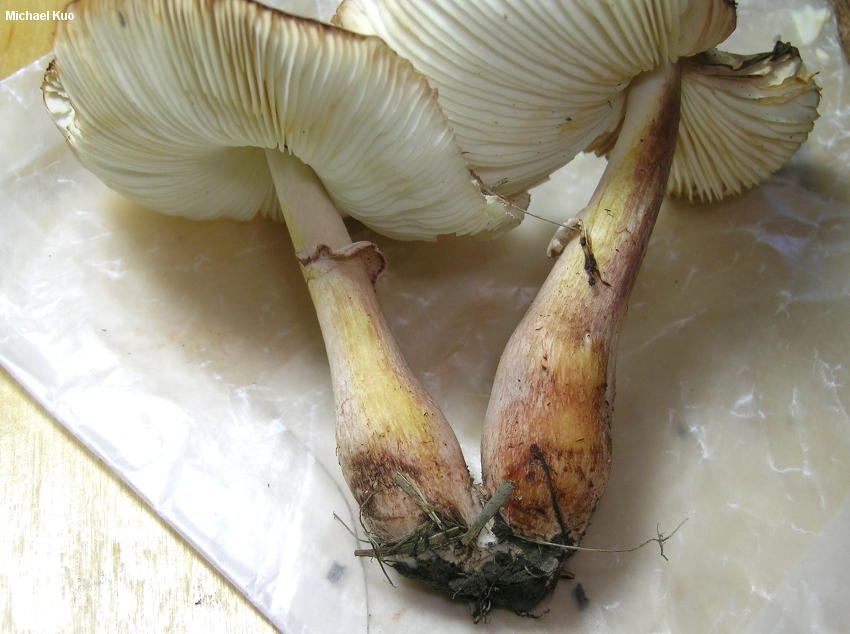
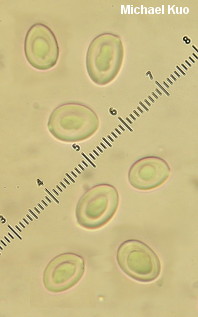
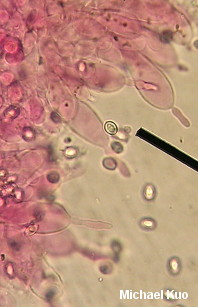
Leucoagaricus americanus [ Basidiomycota > Agaricales > Agaricaceae > Leucoagaricus . . . ] by Michael Kuo This primarily urban mushroom typically appears in summer and fall in sawdust piles, on woodchips, around waste places, in landscaping areas, or on stumps--although I have on rare occasions seen it in the woods, acting as though it belonged. It can be fairly easily identified by its relatively large size, and its distinctive swollen stem, which turns yellow, then slowly reddish, when rubbed. Its cap is scaly, and also turns reddish as the mushroom matures. Leucoagaricus americanus is common in eastern North America, but it also appears occasionally in the West, where it has probably been introduced with woodchips. Compare this mushroom with the much less frequently encountered Leucoagaricus meleagris, which is smaller and grows in clusters. Lepiota americana and Lepiota bresadolae are synonyms. Description: Ecology: Saprobic, growing alone, scattered or gregariously on woodchips, in landscaping areas, near waste places, on disturbed ground, and on stumps; occasionally appearing in woods, on stumps or around deadwood; summer and fall; widely distributed in North America but found much more frequently east of the Rocky Mountains. The illustrated and described collections are from Illinois. Cap: 3-12 cm across; roundish when young, becoming convex and eventually broadly convex or nearly flat--but often featuring a shallow central hump; dry; bald in the button stage, but soon becoming scaly overall, with a bald center; at first whitish with tan to brownish red scales; becoming pinkish brown with deep reddish brown scales; reddening where handled. Gills: Free from the stem; close or crowded; short-gills frequent; creamy white when young; staining pinkish and eventually reddish brown. Stem: 4.5-12 cm long; 1-4 cm thick; distinctively swollen in the bottom half; bald or finely silky; firm; whitish at first, but soon discoloring reddish to reddish brown; bruising fairly promptly yellow, then slowly reddish, when rubbed; with a high, collarlike, collapsing ring that is initially white but becomes stained reddish; basal mycelium white; base attached to thin white cords. Flesh: White throughout; staining slowly yellow to orangish yellow when sliced; in age drying reddish; thick. Odor and Taste: Not distinctive. Chemical Reactions: KOH red on fresh cap surface, but often negative on older caps. Ammonia reported (Vellinga, 2010) to be green on cap surface. Spore Print: White. Microscopic Features: Spores 9-11 x 6-7 µ; ellipsoid; with a very tiny pore; smooth; hyaline in KOH; dextrinoid. Cheilocystidia 50-85 x 7.5-23 µ; clavate or widely fusiform, developing a mucro that extends 3-25 µ; thin-walled; brownish to brown in KOH. Pleurocystidia absent. Pileipellis a cutis; elements 5-13 µ wide, hyaline to brownish in KOH; terminal cells cylindric or tapering, with subacute or merely rounded apices. REFERENCES: (Peck, 1872) Vellinga, 2000. (Saccardo, 1887; Atkinson, 1900; Kauffman, 1918; Kauffman, 1924; H. V. Smith, 1954; Smith, Smith & Weber, 1979; Arora, 1986; Phillips, 1991/2005; Lincoff, 1992; Metzler & Metzler, 1992; Vellinga, de Kok & Bruns, 2003; McNeil, 2006; Kuo, 2007; Vellinga, 2010; Kuo & Methven, 2014.) Herb. Kuo 08289702, 09210101, 06300704, 06131401, 07011504. This site contains no information about the edibility or toxicity of mushrooms. |
© MushroomExpert.Com |


|
Cite this page as: Kuo, M. (2015, July). Leucoagaricus americanus. Retrieved from the MushroomExpert.Com Web site: http://www.mushroomexpert.com/leucoagaricus_americanus.html |