
|
Tulip Tree (Liriodendron tulipifera) [ Trees > Hardwoods > Magnolias . . . ] Forest Types: Oak-Hickory, Beech-Maple, Appalachian Cove
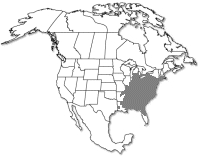
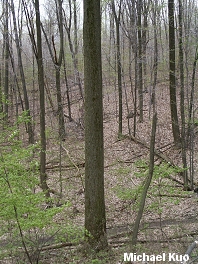
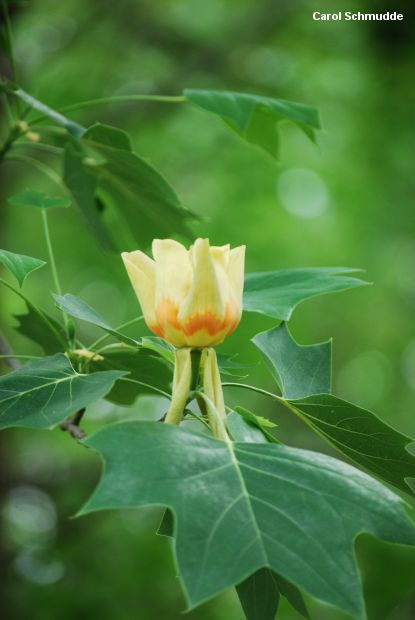
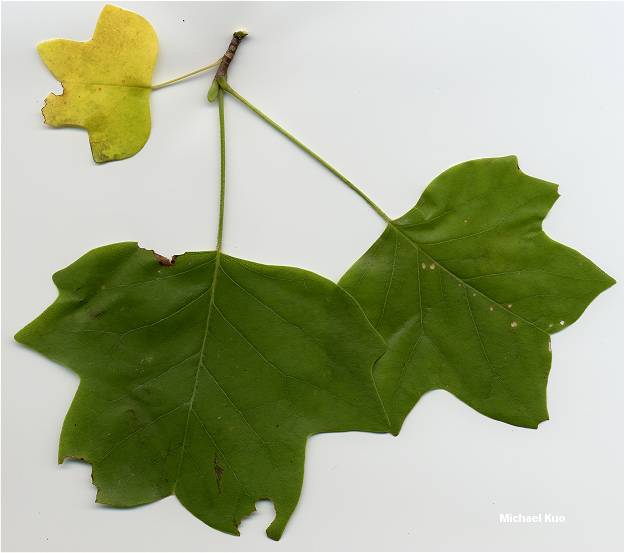
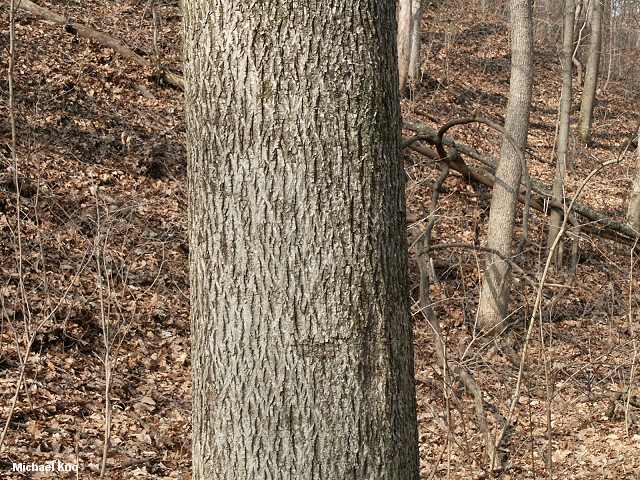
by Michael Kuo Habitat: Typically mixed with other hardwoods; growing east of the Great Plains. Stature: 80-100 feet high; to 6 feet in diameter; crown variable; branches large. The tallest hardwood native to North America, reaching heights of 200 feet. Leaves: 4-6 inches long; with 4 broad lobes (the shape of the leaf looks like a tulip; hence the tree's common name); dark to pale green; smooth-edged; stems 5-6 inches long. Bark: Gray; fairly smooth when young but soon becoming cut into X-shapes (or "diamond shapes," depending on your perspective) that have blunt ridges (as though someone has buffed the bark of a white ssh tree). Fruit: 2-3 inches long; conelike; with spirally arranged scales that break away and litter the forest floor. Frequent Mushroom Associates: Morchella deliciosa; Entoloma vernum; and many others. |
© MushroomExpert.Com |
|
Cite this page as: Kuo, M. (2003, August). Tulip tree (Liriodendron tulipifera). Retrieved from the MushroomExpert.Com Web site: http://www.mushroomexpert.com/trees/liriodendron_tulipifera.html |