
|
Eastern Red Cedar (Juniperus virginiana) [ Trees > Conifers > Cedars & Junipers . . . ] Forest Type: Various
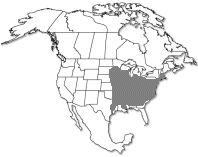
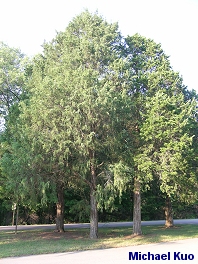
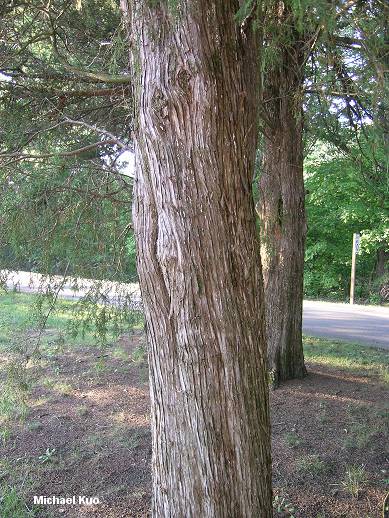
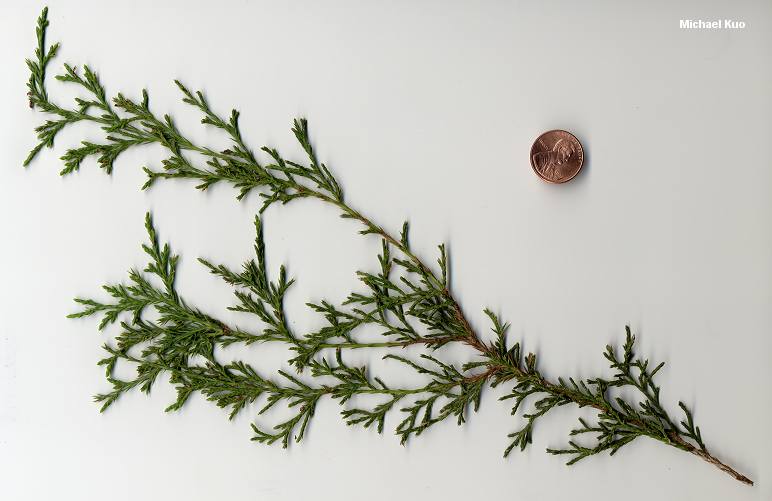
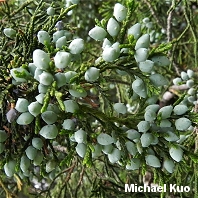
by Michael Kuo Habitat: Rarely in pure stands; usually mixed with hardwoods; common as a pioneer species in old fields and on poor, rocky soil. Stature: 30-40 feet high; 1-2 feet in diameter; pyramid-shaped or irregular. Needles: When young needle-like and sharp, about 1/2 inch long; when mature scale-like and tightly pressed to branchlets; dark green. Bark: Thin; in hairy strips that begin to peel away; reddish brown. Fruit: Under 1/2 inch; bluish, with a whitish sheen; berry-like. Expanded treatment of this tree can be found at our companion site, midwestnaturalist.com, here. Frequently Associated Mushrooms: Antrodia juniperina, Gymnosporangium juniperi-virginianae (the "cedar-apple rust" that depends on eastern red cedar and apple trees to complete its life cycle), Pyrofomes juniperinus, Trametes villosa, and others. |
© MushroomExpert.Com |

|
Cite this page as: Kuo, M. (2006, April). Eastern red cedar (Juniperus virginiana). Retrieved from the MushroomExpert.Com Web site: http://www.mushroomexpert.com/trees/juniperus_virginiana.html |