| Major Groups > Gilled Mushrooms > Pale-Spored > Waxy Caps > Hygrophorus roseobrunneus |

|
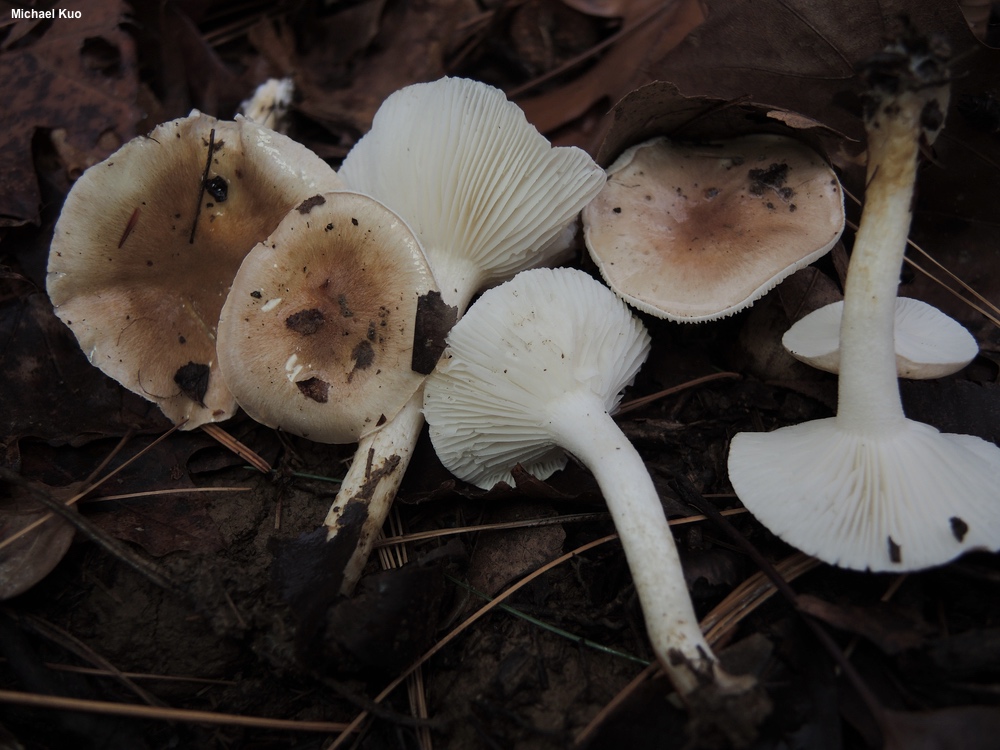
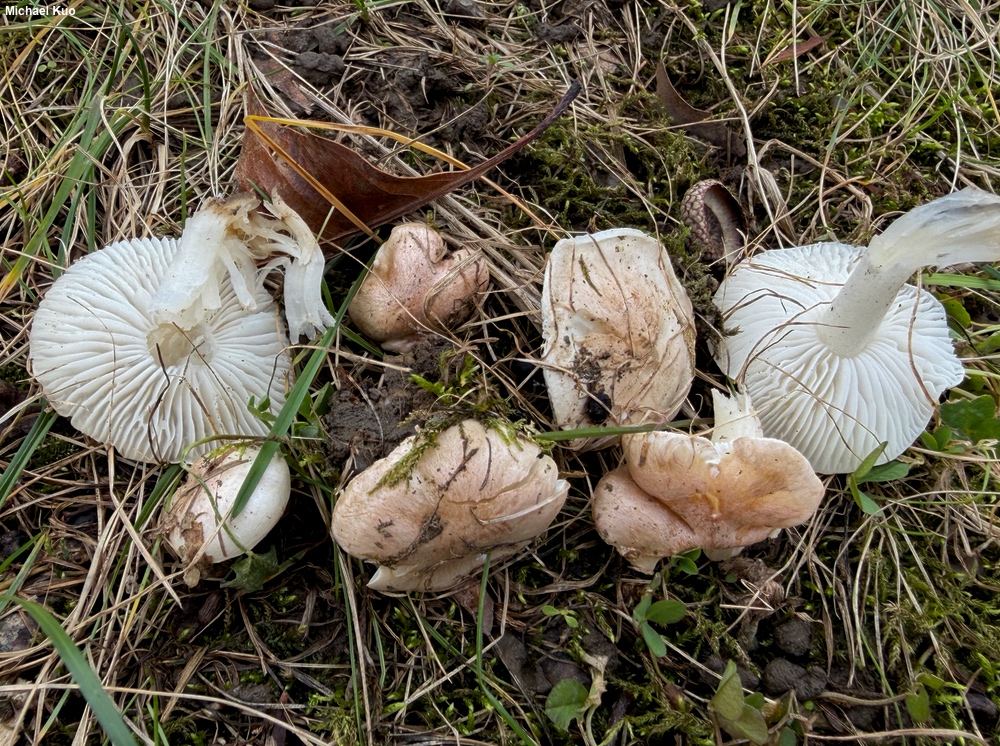
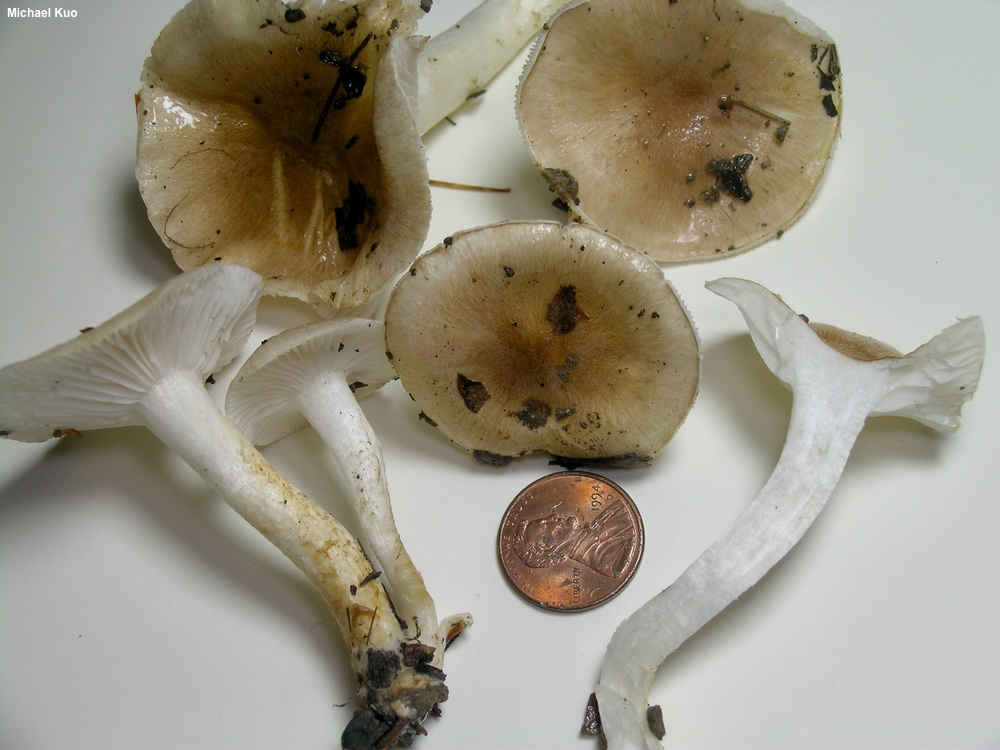
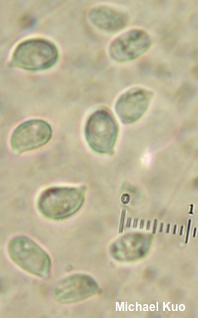
[ Basidiomycota > Agaricales > Hygrophoraceae > Hygrophorus . . . ] Hygrophorus roseobrunneus by Michael Kuo, 18 September 2026 Although the species epithet roseobrunneus means "rose-brown," the color of this species is fairly variable, ranging from pinkish to tan, brown, pinkish brown, or pale brownish. The stem apex is granular-mealy, as is the case with many Hygrophorus species, and the fresh cap is sticky to slimy—though it can dry out quickly. There is no distinctive odor. In the Midwest and eastern North America, Hygrophorus roseobrunneus is often one of the last mycorrhizal mushrooms of the year, appearing in November and December under oaks. On the West Coast, it appears under live oaks in fall and winter. By current definitions the West Coast and eastern versions of this mushroom constitute the same thing, but it would not surprise me if these were distinct phylogenetic species. Hygrophorus roseibrunneus (with an i) is a synonym. Description: Ecology: Mycorrhizal with oaks; growing scattered or gregariously; late fall and winter; originally described from California (Murrill 1916); widespread in North America. The illustrated and described collections are from Illinois and Ohio. Cap: 2.5–6 cm; convex when young, becoming broadly convex, flat, or shallowly depressed; sticky when fresh, but often drying out quickly; bald, or finely fuzzy in places; pinkish tan to brown, sometimes with a darker center; fading to nearly whitish; often radially streaked; the margin not lined. Gills: Broadly attached to the stem; close; short-gills occasional; white. Stem: 2–7 cm long; 0.5–1 cm thick; more or less equal, or tapered to a slightly curved base; granular-mealy above but bald below; white, discoloring yellow with age; basal mycelium white. Flesh: White; unchanging when sliced. Odor and Taste: Not distinctive. Chemical Reactions: KOH on cap at first orange, fading to negative. Spore Print: White. Microscopic Features: Spores 6–9 x 3.5–5 µm; subellipsoid or occasionally subamygdaliform; apiculate; smooth; hyaline in KOH; inamyloid. Basidia 35–38 x 4–6 µm; subclavate; 4-sterigmate. Cystidia not found. Lamellar trama divergent. Pileipellis an ixocutis of elements 3–11 µ wide, smooth, hyaline in KOH. Clamp connections present. REFERENCES: W. A. Murrill, 1916. (Hesler & Smith, 1963; Largent, 1985; Weber & Smith, 1985; Arora, 1986; Horn, Kay & Abel, 1993; Bessette et al., 2012; Desjardin, Wood & Stevens, 2015; Siegel & Schwarz, 2016.) Herb. Kuo 12151503, 12292501. This website contains no information about the edibility or toxicity of mushrooms. |
© MushroomExpert.Com |


|
Cite this page as: Kuo, M. (2026, September). Hygrophorus roseobrunneus. Retrieved from the MushroomExpert.Com Web site: http://www.mushroomexpert.com/hygrophorus_roseobrunneus.html |