| Major Groups > Boletes > Gyroporus > Gyroporus castaneus |

|
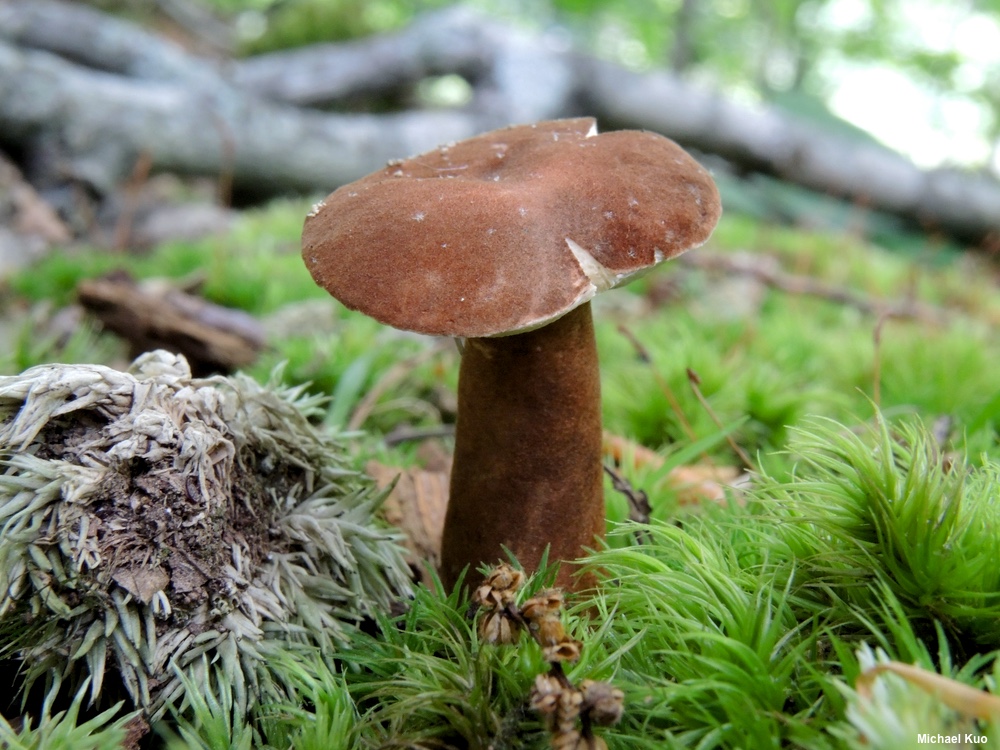
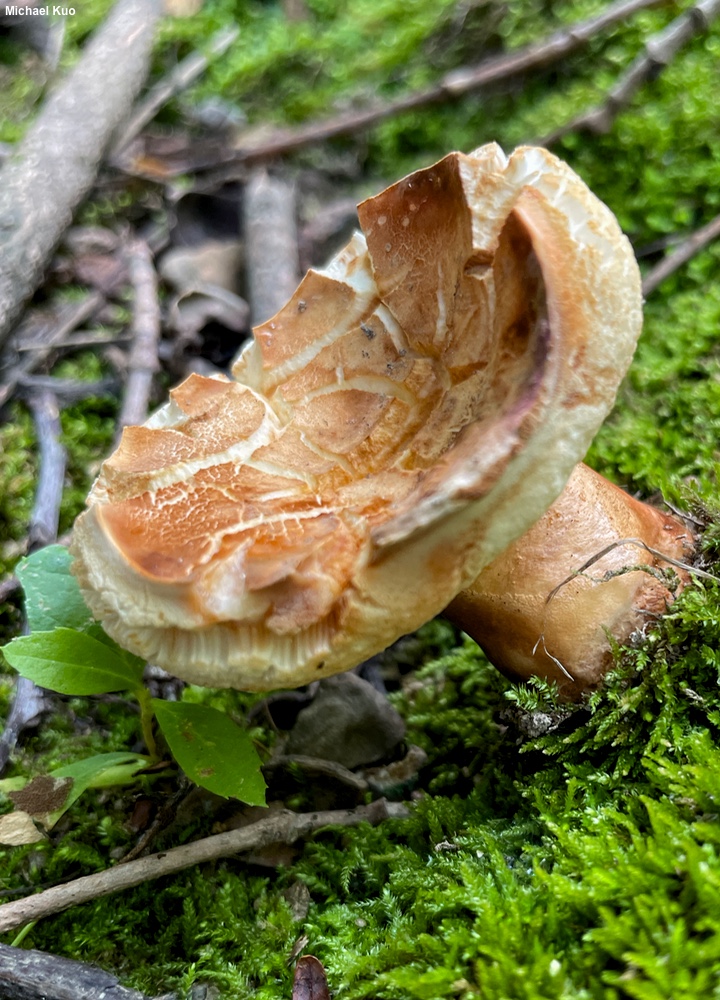
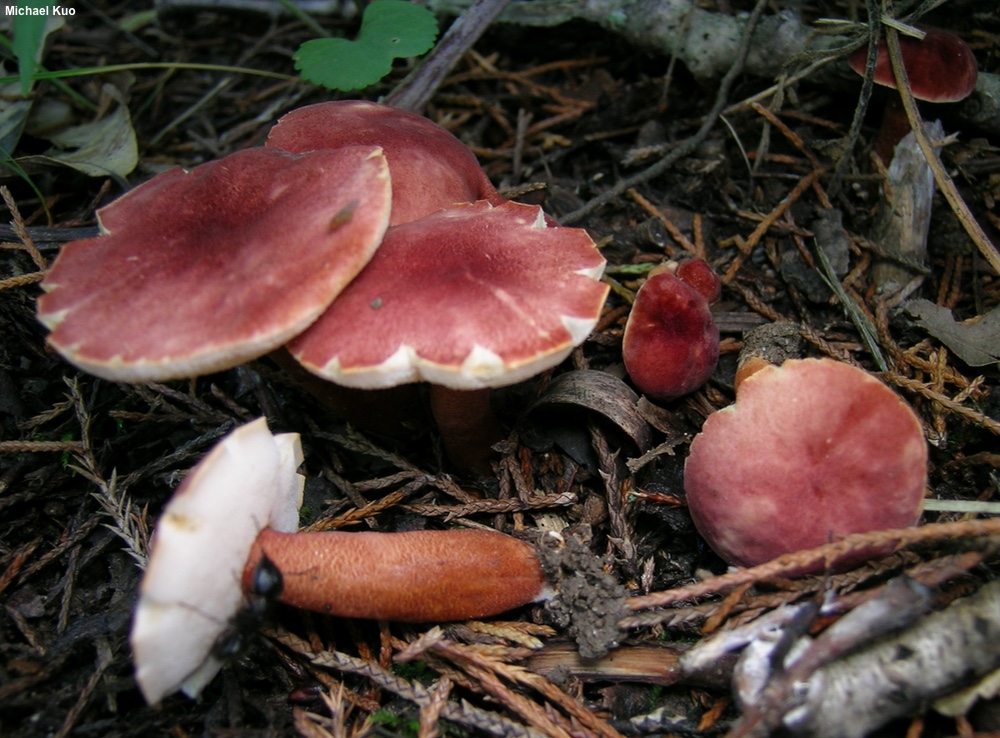
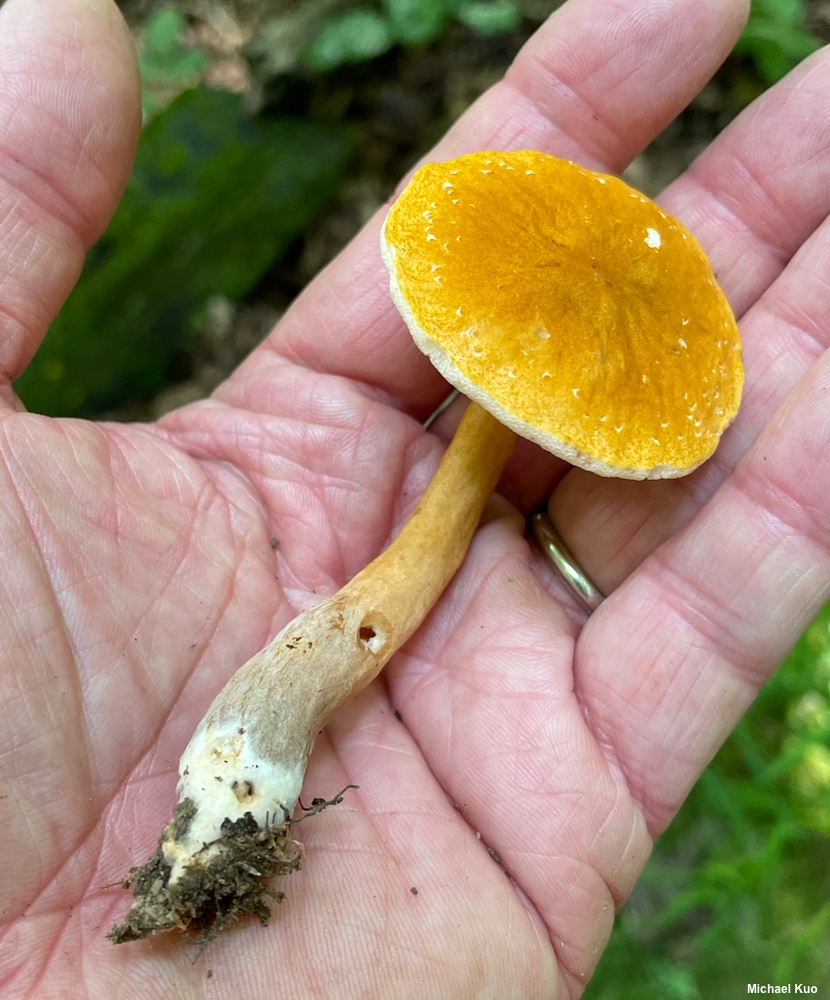
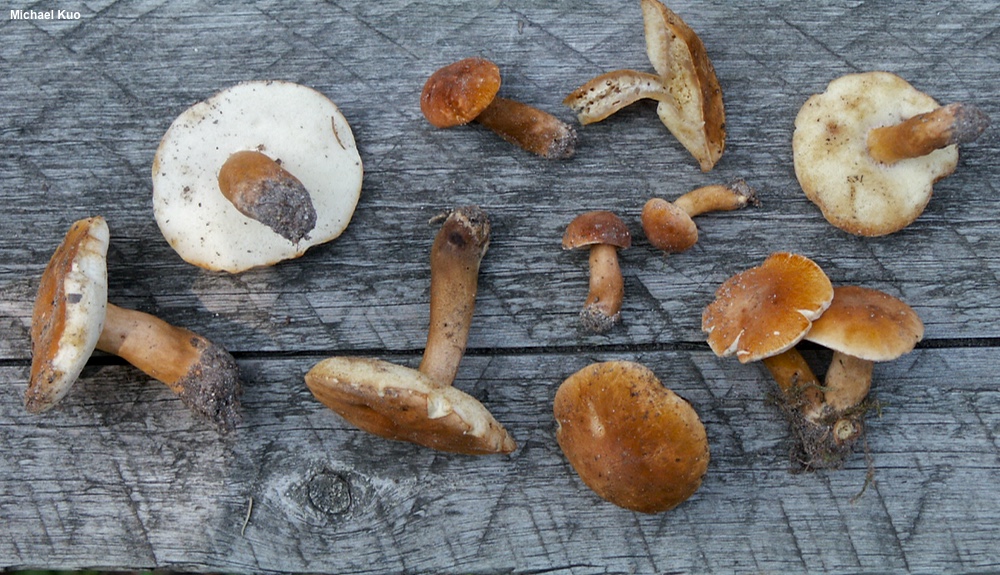
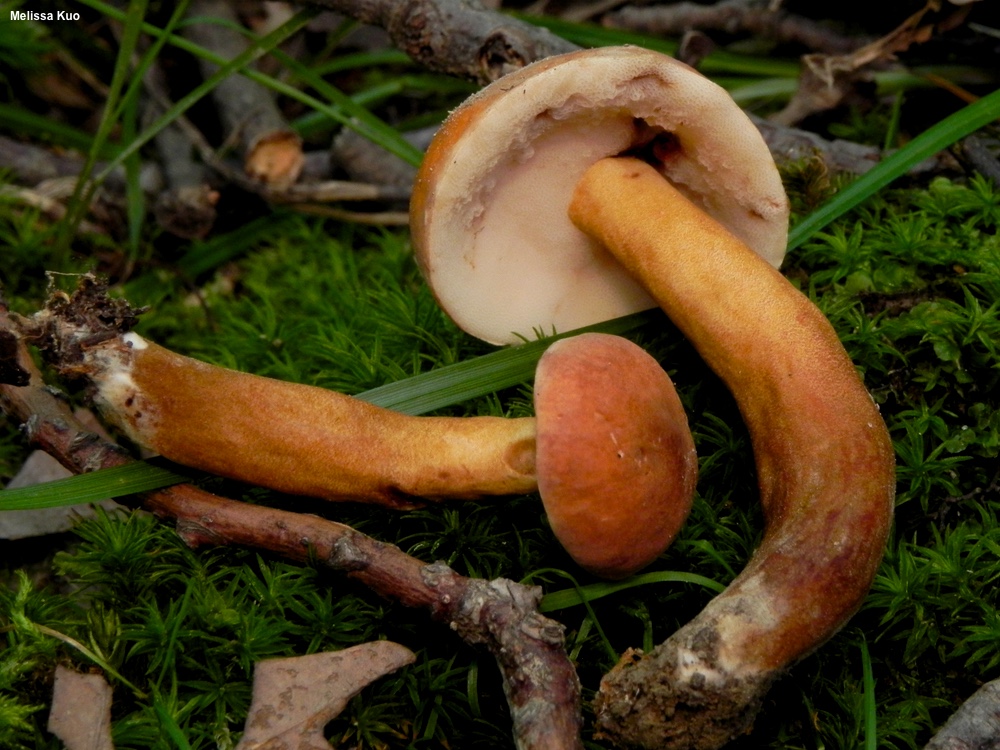
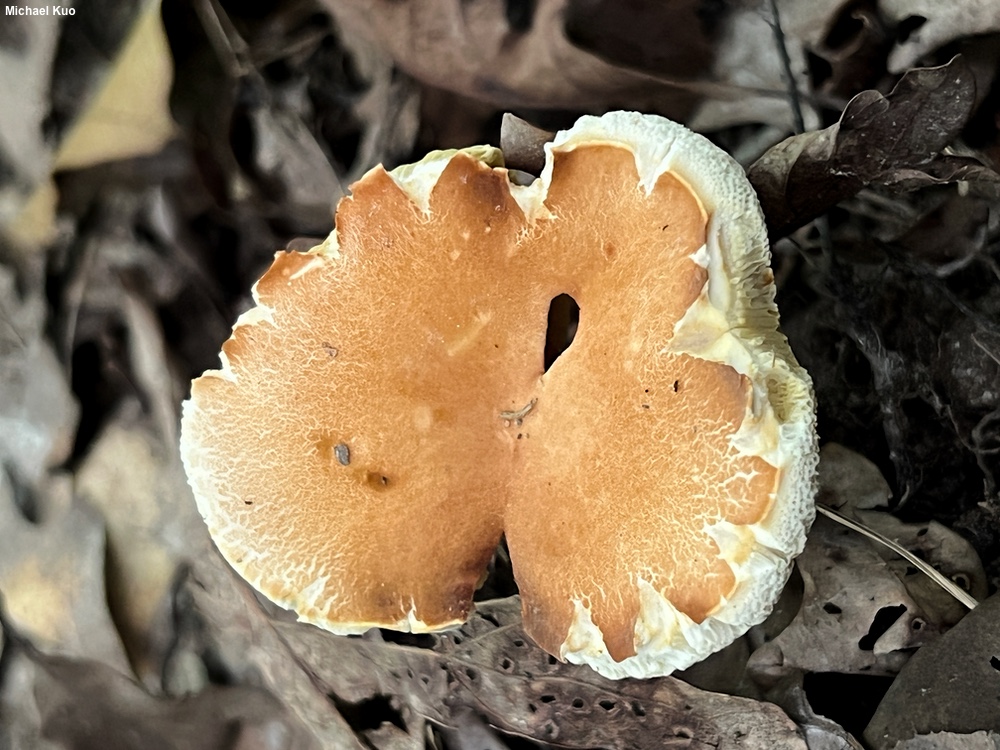
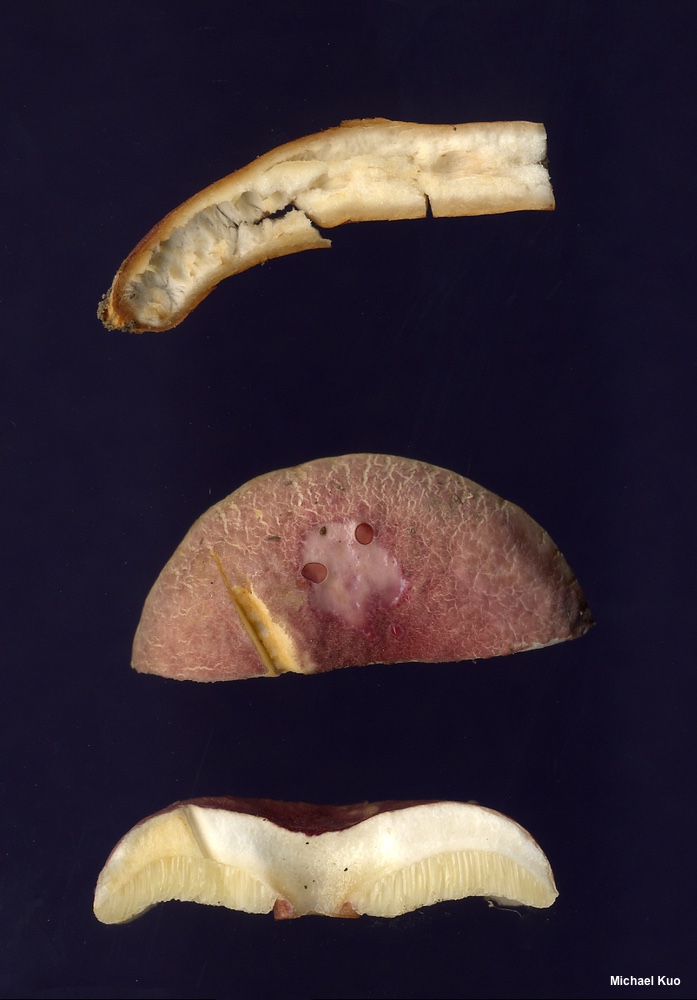
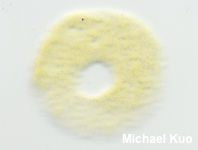
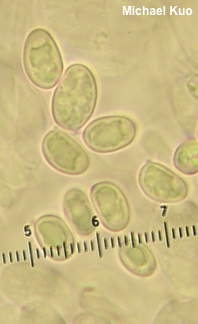
[ Basidiomycota > Boletales > Gyroporaceae > Gyroporus . . . ] Gyroporus castaneus by Michael Kuo, 12 June 2026 This smallish bolete is a common summer feature in eastern North America's hardwood forests, easily recognized by its brittle, hollowing stem, relatively small size, the often splitting cap margin, and its pale yellow spore print. Gyroporus castaneus is variable in its colors, ranging from the "chestnut brown" represented by its Latin name, castaneus, to orange-brown, yellow-brown, reddish brown, pink, nearly purple, purplish red, brownish orange, and orange. Now, before you misplace your feces, Captain iNat, Sir Mycosplainer, Mr. MycoBro Dude, I am not ignoring Gyroporus borealis, Gyroporus purpurinus, Gyroporus smithii, or even the chunky, unnamed, California version. I just disagree, after careful consideration of the literature, that these putative species are supported by anything approaching scientific rigor. I offer a full discussion, for those who care, here; additionally, if you insist on "going there" I've done my best to enable you with the pages linked above. Thanks to Michelle Lierl for documenting, collecting, and preserving Gyroporus castaneus for study; her collection is deposited in The Herbarium of Michael Kuo. Description: Ecology: Mycorrhizal with oaks and other hardwoods (and sometimes reported under conifers); growing alone, scattered, or gregariously; summer and fall; originally described from France (Bulliard 1788); widespread in Europe and Asia; fairly widely distributed in North America, but rare to absent in most western areas. The illustrated and described collections are from Illinois, Indiana, Minnesota, Ohio, and Pennsylvania. Cap: 1.5–6 cm; convex, becoming broadly convex or sometimes nearly flat in age; dry; bald or slightly velvety; often becoming cracked with age; the margin often splitting in places; varying from purple to pink, orange, or a shade of brown (from orange-brown to yellow-brown, reddish brown, or just "brown"). Pore Surface: White to creamy at first, becoming dull yellow; not bruising; 2–3 circular to sub-angular pores per mm; tubes to 8 mm deep. Stem: 2.5–10 cm long; 0.5–1 cm thick; more or less equal; brittle; soon hollowing; colored like the cap or slightly paler; bald; not reticulate; basal mycelium white to faintly yellowish or pastel orange. Flesh: White; brittle; not staining on exposure. Odor and Taste: Not distinctive. Chemical Reactions: Ammonia negative to pinkish on cap; negative on flesh. KOH negative to yellowish on cap; negative to yellowish on flesh. Iron salts negative on cap and flesh. Spore Print: Pale yellow. Microscopic Features: Spores 6–12 x 3.5–6.5 µ; smooth; ellipsoid; hyaline in KOH. Basidia 28–32 x 9–12 µm; clavate; 4-sterigmate. Hymenial cystidia 25–45 x 3–8 µm; narrowly lageniform, occasionally with a long neck; smooth; thin-walled; hyaline in KOH. Pileipellis a trichoderm of elements 5–18 µm wide, smooth, hyaline in KOH; terminal cells cylindric with rounded apices, or not infrequently narrowly lageniform, with narrowed apices; subterminal cells not swollen. REFERENCES: (J. B. F. Bulliard, 1788) L. Quélet, 1886. (Coker & Beers, 1943; Singer, 1945; Snell & Dick, 1970; Smith & Thiers, 1971; Thiers, 1975; Grund & Harrison, 1976; Phillips, 1981; Smith, Smith & Weber, 1981; Weber & Smith, 1985; Arora, 1986; Breitenbach & Kränzlin, 1991; Phillips, 1991/2005; Lincoff, 1992; Both, 1993; Bessette, Roody & Bessette, 2000; Roody, 2003; McNeil, 2006; Miller & Miller, 2006; Kuo, 2007; Nonis, 2007; Ortiz-Santana et al., 2007; Binion et al., 2008; Boccardo et al., 2008; Trudell & Ammirati, 2009; Buczacki et al., 2012; Kuo & Methven, 2014; Vizzini et al., 2015; Bessette, Roody & Bessette, 2016; Siegel & Schwarz, 2016; Baroni, 2017; Kibby, 2017; Noordeloos, 2018; Davoodian et al., 2018; Elliott & Stephenson, 2018; Sturgeon, 2018; Knudsen & Taylor, 2018; Læssøe & Petersen, 2019; Davoodian et al., 2020; Kibby, 2020; McKnight et al., 2021.) Herb. Kuo 07079403, 06289504, 07180201, 07230306, 06300709, 07010703, 06180801, 07050802, 07120810, 07250902,07051402, 07242201, 07282201, 07012501, 07162501. This website contains no information about the edibility or toxicity of mushrooms. |
© MushroomExpert.Com |
|
Cite this page as: Kuo, M. (2026, June). Gyroporus castaneus. Retrieved from the MushroomExpert.Com Web site: http://www.mushroomexpert.com/gyroporus_castaneus.html |