| Major Groups > Gilled Mushrooms > Pale-Spored > Russula > Shrimp Russulas > Russula katarinae |

|
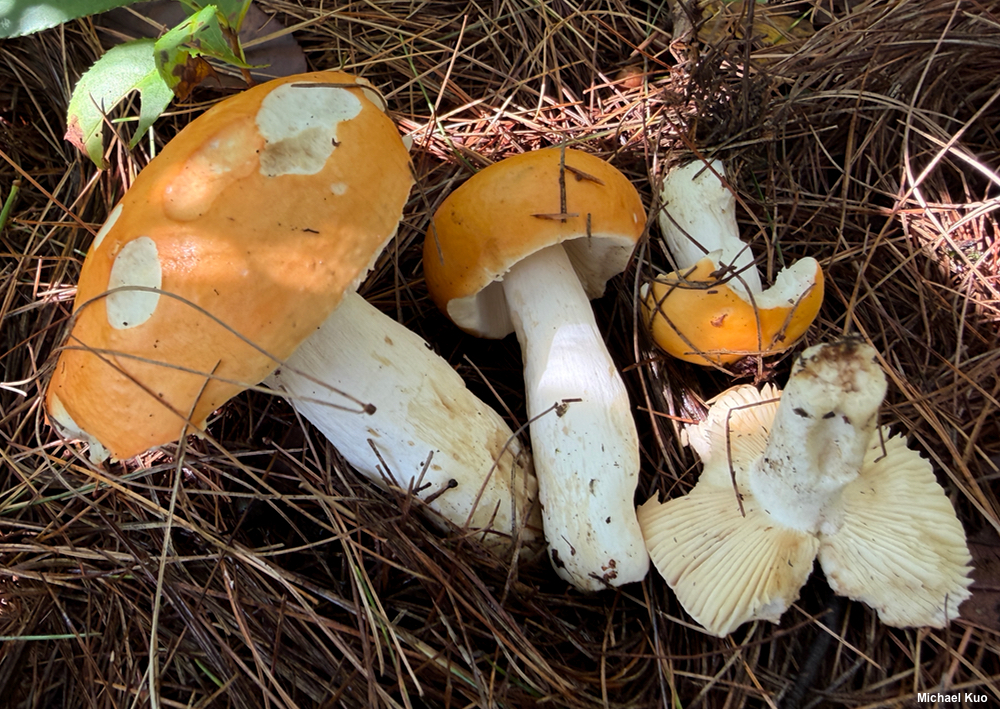
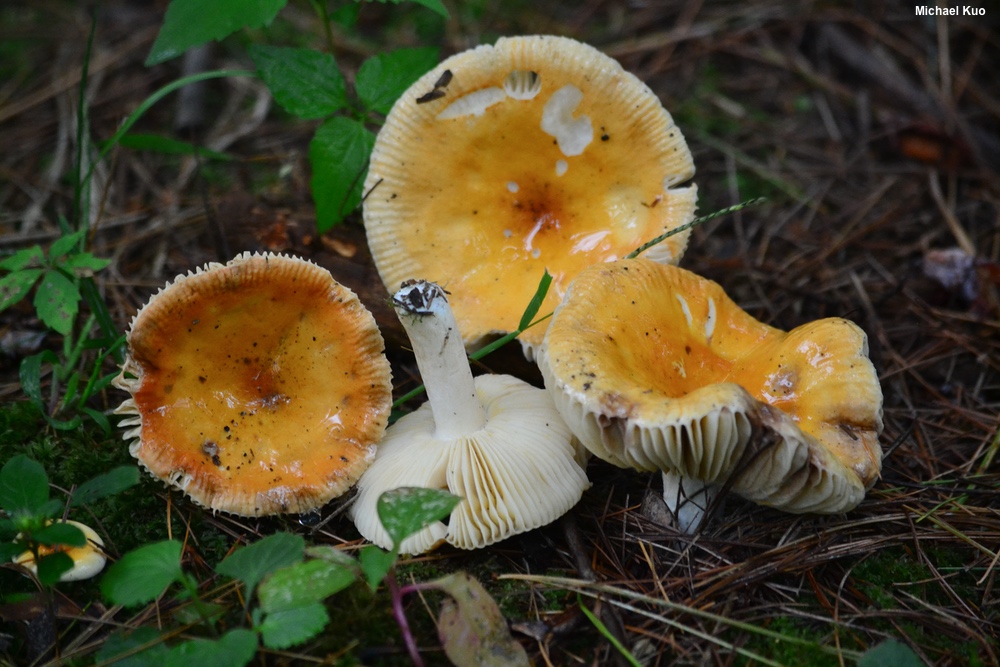
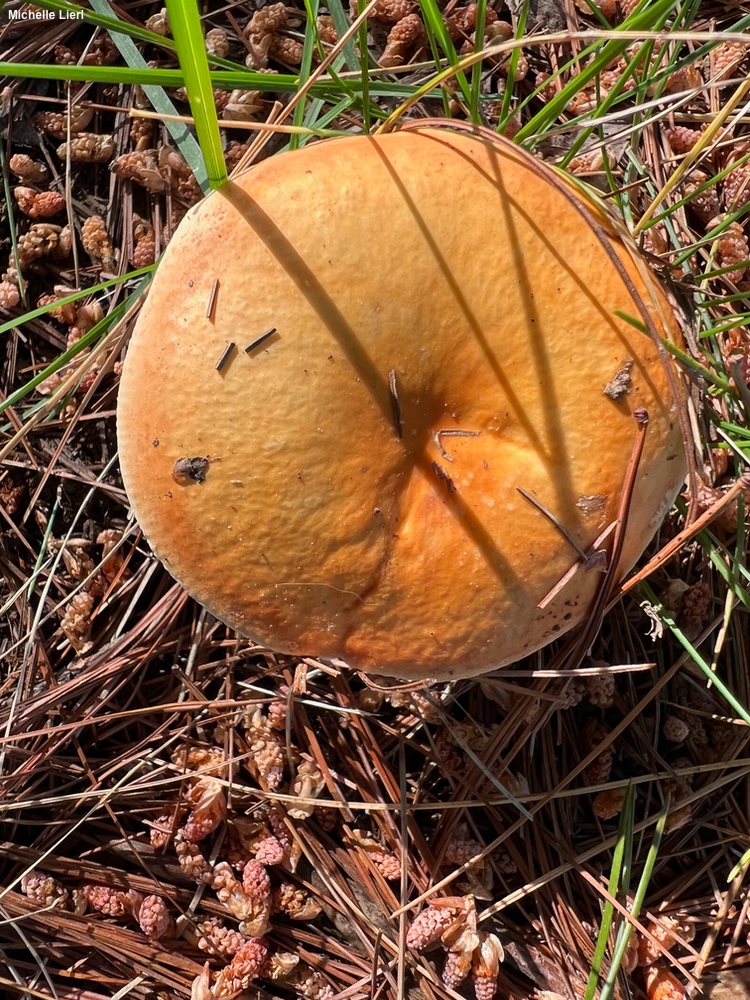
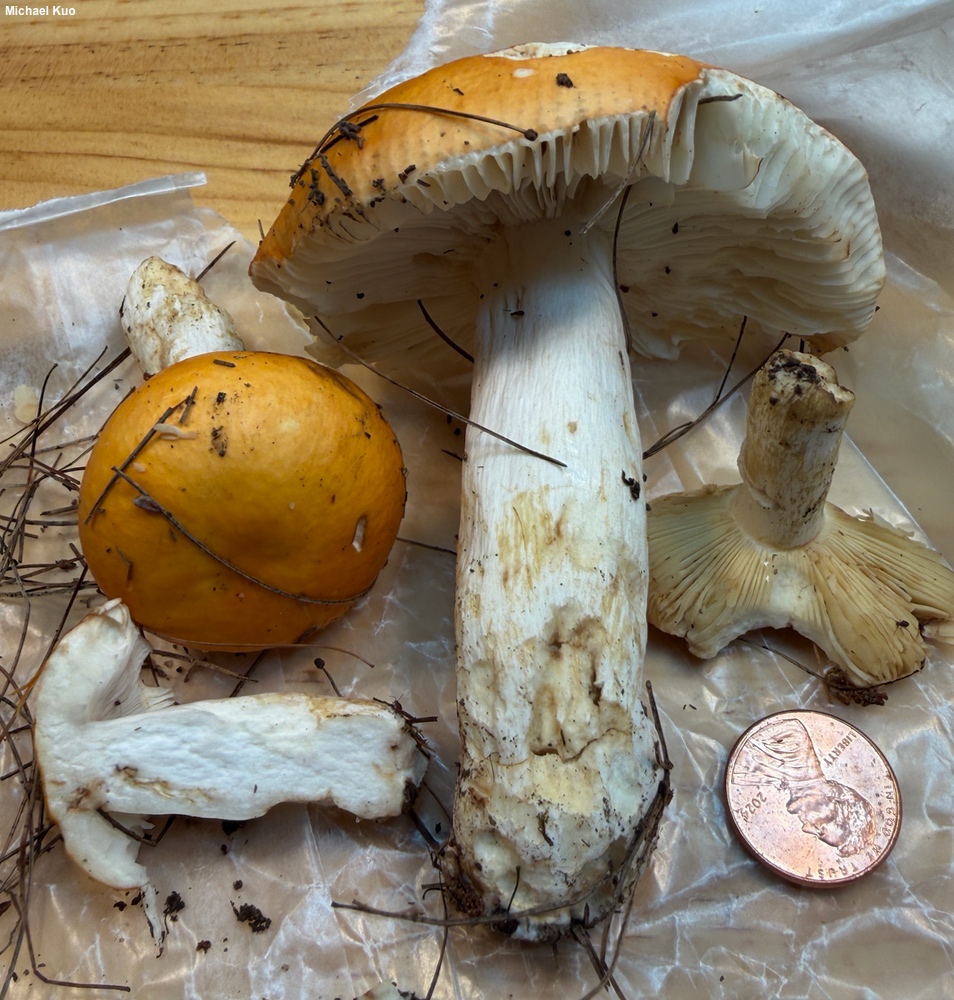
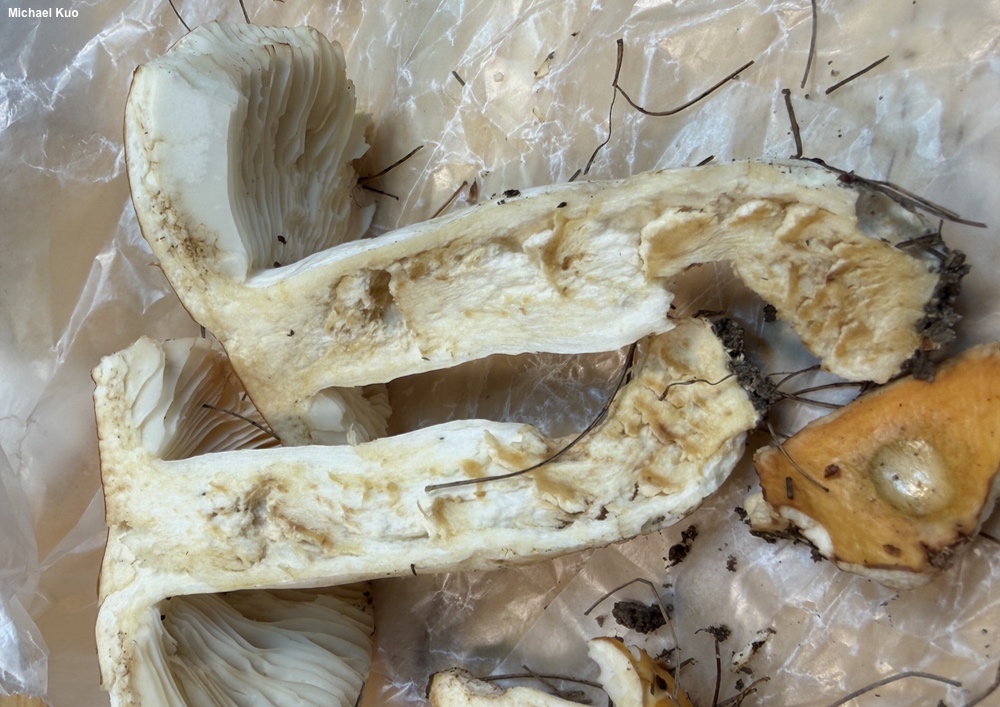
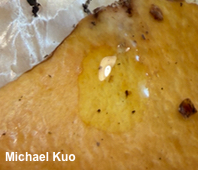
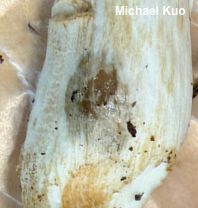
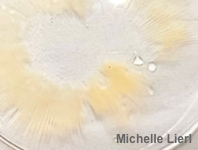
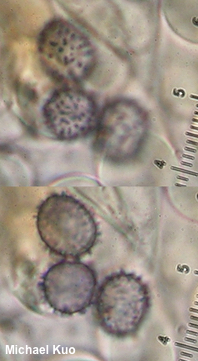
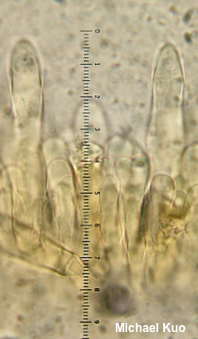
[ Basidiomycota > Russulales > Russulaceae > Russula . . . ] Russula katarinae by Michael Kuo, 7 October 2026 One of several shrimp russulas in eastern North America, Russula katarinae shares with its close relatives a shrimp- or fish-like odor, brown staining flesh and surfaces, and a color change to green when iron salts are placed on the stem surface. It can be distinguished from the other shrimp russulas by its association with eastern white pine and its bright orange cap. A similar orange shrimp russula appears in the Rocky Mountains in association with high-elevation conifers; see Russula species 03. Thanks to Michelle Lierl for documenting, collecting, and preserving Russula katarinae for study; her collection is deposited in The Herbarium of Michael Kuo. Description: Ecology: Mycorrhizal with eastern white pine; growing alone or gregariously; late summer and fall; originally described from New York (Adamčík et al 2015); distribution not yet determined, but possibly to be expected from the Great Plains eastward, throughout the range of the host tree; reported from Indiana to New York. The illustrated and described collections are from Indiana and Ohio. Cap: 3–9 cm; convex, becoming broadly convex, planoconvex, or with a shallow central depression; sticky when fresh; bald; slightly wrinkled; the cuticle peeling easily about halfway to the center; bright orange to yellow-orange; the margin becoming shallowly lined at maturity. Gills: Narrowly attached to the stem; close; short-gills infrequent; whitish, becoming dull yellowish; spotting lilac brownish to brownish. Stem: 2–8 cm long; 1–2.5 cm thick; equal; dry; bald; white, bruising slowly brownish. Flesh: White; staining slowly brownish to purplish brown or brown when bruised. Odor and Taste: Odor fishy, especially when specimens are dried; taste not distinctive. Chemical Reactions: KOH on cap surface dull yellowish. Iron salts on stem surface dark greenish gray. Spore Print: Dull orangish yellow. Microscopic Features: Spores 9–12 x 7–8 µm including ornamentation; ellipsoid; ornamentation as amyloid, mostly isolated warts 0.5–1.0 µm high, with few connectors; not reticulate. Basidia 38–42 x 9–12 µm; clavate; 4-sterigmate. Pleurocystidia 70–80 x 10–11 µm; fusiform; smooth; thin-walled; contents granular; hyaline in KOH. Pileipellis an ixocutis; elements 2–4 µm wide, smooth, hyaline in KOH; pileocystidia not found. REFERENCES:S. Adamčík & B. Buyck, 2015. (Adamčík et al, 2015; Adamčík et al, 2019; Noffsinger et al., 2024.) Herb. Kuo 09191702, 05262401, 09242602. This site contains no information about the edibility or toxicity of mushrooms. |
© MushroomExpert.Com |
|
Cite this page as: Kuo, M. (2026, October). Russula katarinae. Retrieved from the MushroomExpert.Com Web site: http://www.mushroomexpert.com/russula_katarinae.html |